AOR In Hawaii Pt.1 – Interview With Kevin I.
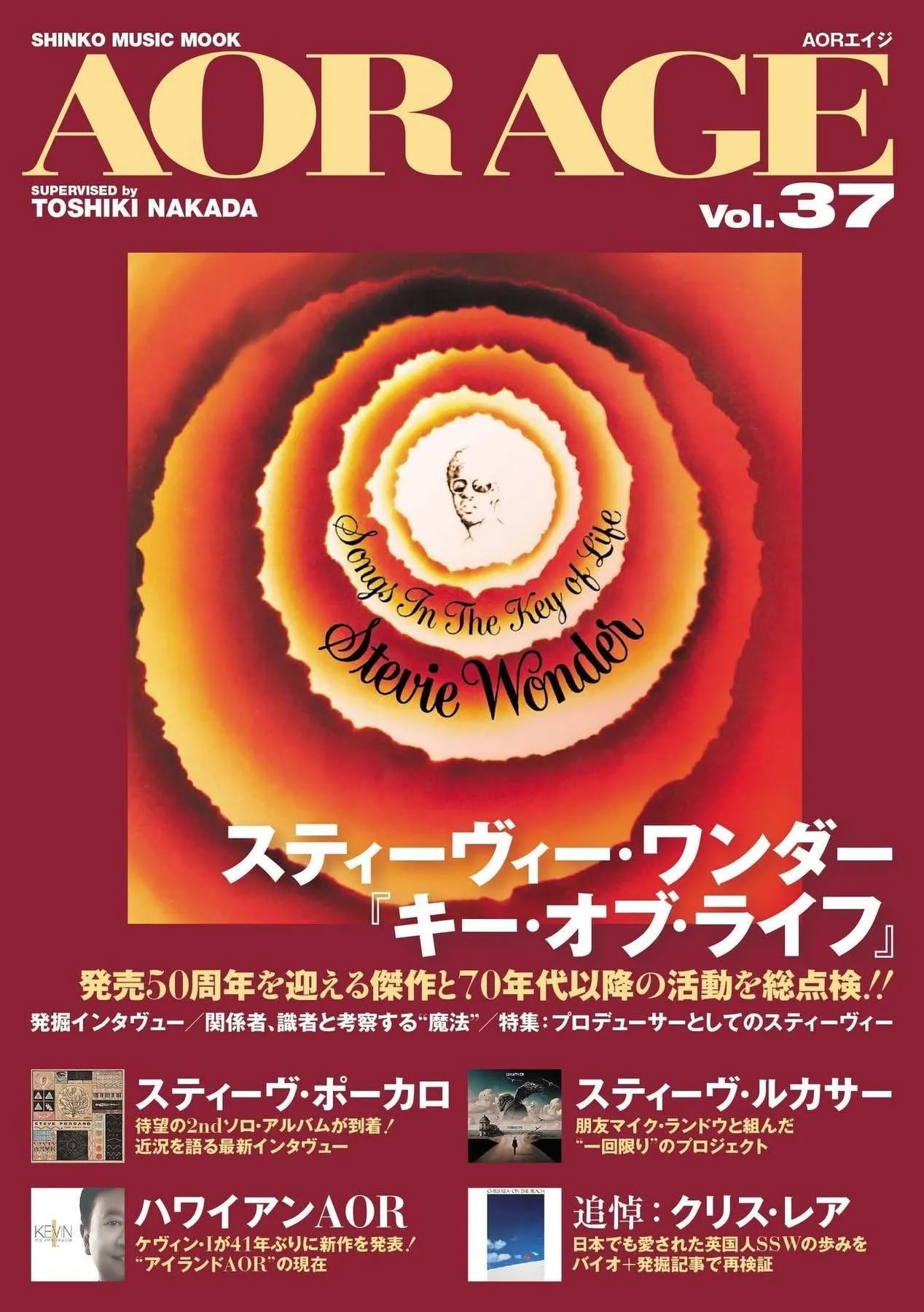
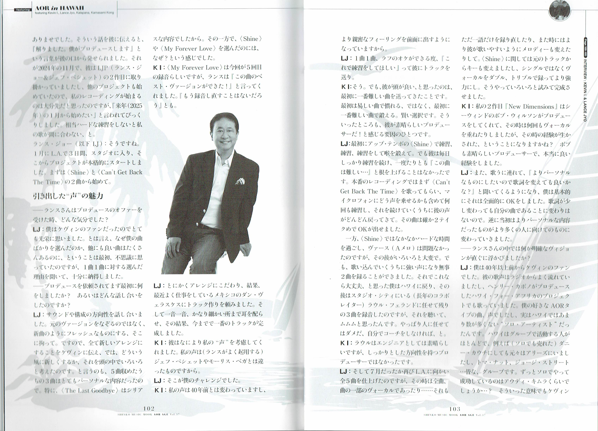
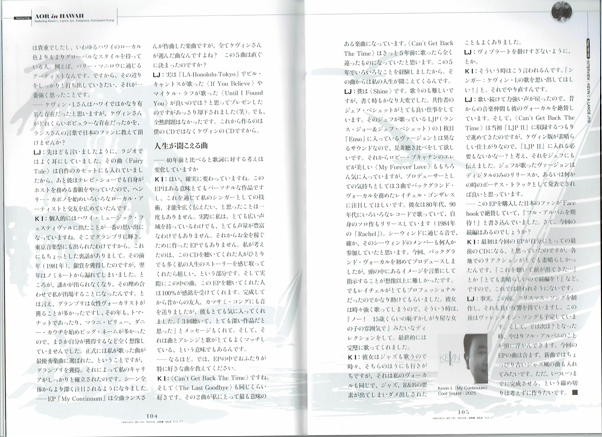
In this post, I share part one of an English translation of a recent Japanese interview from AOR Age (Edition 37 – January 2026), featuring myself alongside Lance Jyo, Kalapana, and Kamasami Kong. It’s an honor to see my music journey discussed through an international lens, and I’m grateful for the thoughtful questions and perspectives from Toshi Nakada of AOR Age.
Disclaimer: The following interview was translated from Japanese to English using AI-assisted translation. The translation is interpretive rather than verbatim and is intended to convey the substance and context of the original discussion. Some inaccuracies or omissions may be present.
Interview: KEVIN I. & LANCE JYO
“I want listeners to musically feel my life story.”
Kevin I. speaks candidly with producer Lance Jyo about returning to recording after a 41year absence and the creation of the EP My Continuum.
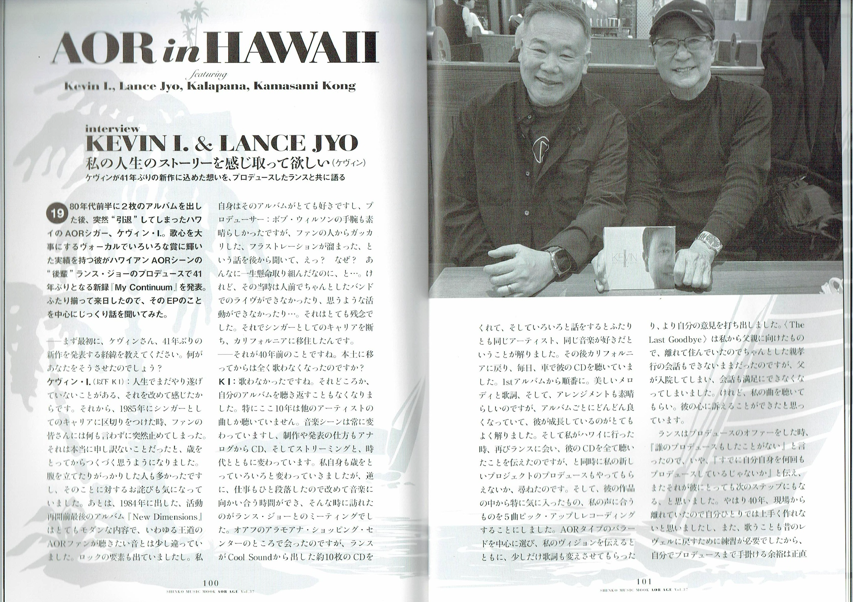
Page 1-2 of the interview, featuring a photo of Lance Jyo and Kevin I.
After releasing two albums in the first half of the 1980s, you suddenly stepped away from music. You were known for your smooth vocals and a strong presence within the Hawaiian AOR scene. What led to that decision?
Kevin I.: There are moments in life when you have to step back and reassess. After my debut in 1980, my career moved quickly, but by 1985 I felt a growing gap between what I wanted to express and the realities of the industry at the time. I also felt I couldn’t fully perform live music in the way I envisioned with a proper band. There was frustration, and eventually I decided to end my career as a singer and relocate to California.
At the time, many people were surprised. Some were disappointed. But for me, it was a necessary choice. My final album of that period, New Dimensions (1984), contained material that leaned toward AOR but also included rock elements. It was an honest reflection of where I was then.
After moving, did you continue singing or listening to your own music?
Kevin I.: Honestly, no. I didn’t sing, and I even stopped listening to my own albums and music. Over the following decades, the music industry changed dramatically—production methods, distribution, CD formats, and later digital platforms. My life also changed. I built a successful professional executive business career outside of music, and singing became something I left behind.
Ironically, it was much later — during a meeting with fellow composer/artist, Lance Jyo in Honolulu — that music reentered my life in a meaningful way.
Reconnecting through AOR
Kevin I.: Lance and I quickly realized we shared similar life and musical sensibilities. We both love AOR, and our tastes aligned naturally. When I visited Hawaii, Lance gifted me with several of his CDs, and I listened to them carefully — from his first album onward. His sense of melody, harmony, and arrangement resonated deeply with me. I could also hear his growth as an artist.
On my next trip when I returned to Hawaii, we got together and I asked him whether he would consider producing a bucket list new music project for me. That conversation became the starting point of everything that followed.
Selecting the songs and recording again
Kevin I.: From Lance’s extensive music catalog of work, I selected five songs that truly spoke to me and we began arranging and recording them anew. This became My Continuum. The AOR aesthetic was central, but I wanted the songs to feel contemporary and honest to who I am today.
Listening to the recordings as they took shape, I felt something I hadn’t felt in decades—a quiet confidence and a sense of closure to a chapter of my life that meant so much to me but felt incomplete.
The EP includes songs such as “Can’t Get Back the Time,” “Shine,” and “My Forever Love.” What do these songs represent to you?
Kevin I.: “Can’t Get Back the Time” reflects the reality that time only moves forward. It’s not so much about about regret, but acceptance. “Shine” is about resilience and choosing hope despite the odds. “My Forever Love” speaks to the enduring emotional bonds of love that connects life partners, even as life changes.
Another song, “The Last Goodbye,” was written as a message to my late father. There were many things I never had the chance to say to him while he was alive. This song allowed me to finally express those feelings and gave me personal closure.
Lance Jyo on producing Kevin I.
Lance Jyo: When Kevin asked me to produce his return project, I was honestly surprised — but honored. I’ve been a fan of his voice and music for a long time. My goal wasn’t to recreate the past, but to present his voice in a way that feels natural and current. We focused heavily on arrangement, phrasing, and emotional clarity.
Kevin’s voice today has a new depth that only comes with time and experience. Rather than hiding that, we leaned into it.
How do you feel your voice and approach to music have changed over 40 years?
Kevin I.: I think my voice carries more life experience now. Technically, things change — but emotionally, I feel more grounded. Back then, I was chasing possibilities and dreams. Now, I’m expressing experience. That’s why the title My Continuum felt right. It connects who I was with who I am today.
Looking forward…
Lance Jyo: Kevin’s return is meaningful not just for longtime fans, but also for listeners discovering Hawaiian AOR for the first time. His music bridges eras and generations.
Kevin I.: I’m very grateful to the fans and listeners who didn’t forget me. This project wasn’t about restarting a career… it was about closure and finishing something with honesty. If listeners feel even a part of that sincerity, then I feel I’ve successfully done what we set out to do; personally provide me with closure and give the listeners the music that they want from me to add to the soundtrack of their lives.
- End of Interview -
(Translated from AOR Age magazine, edition 37, Japanese original)
Listen to My Continuum on Spotify