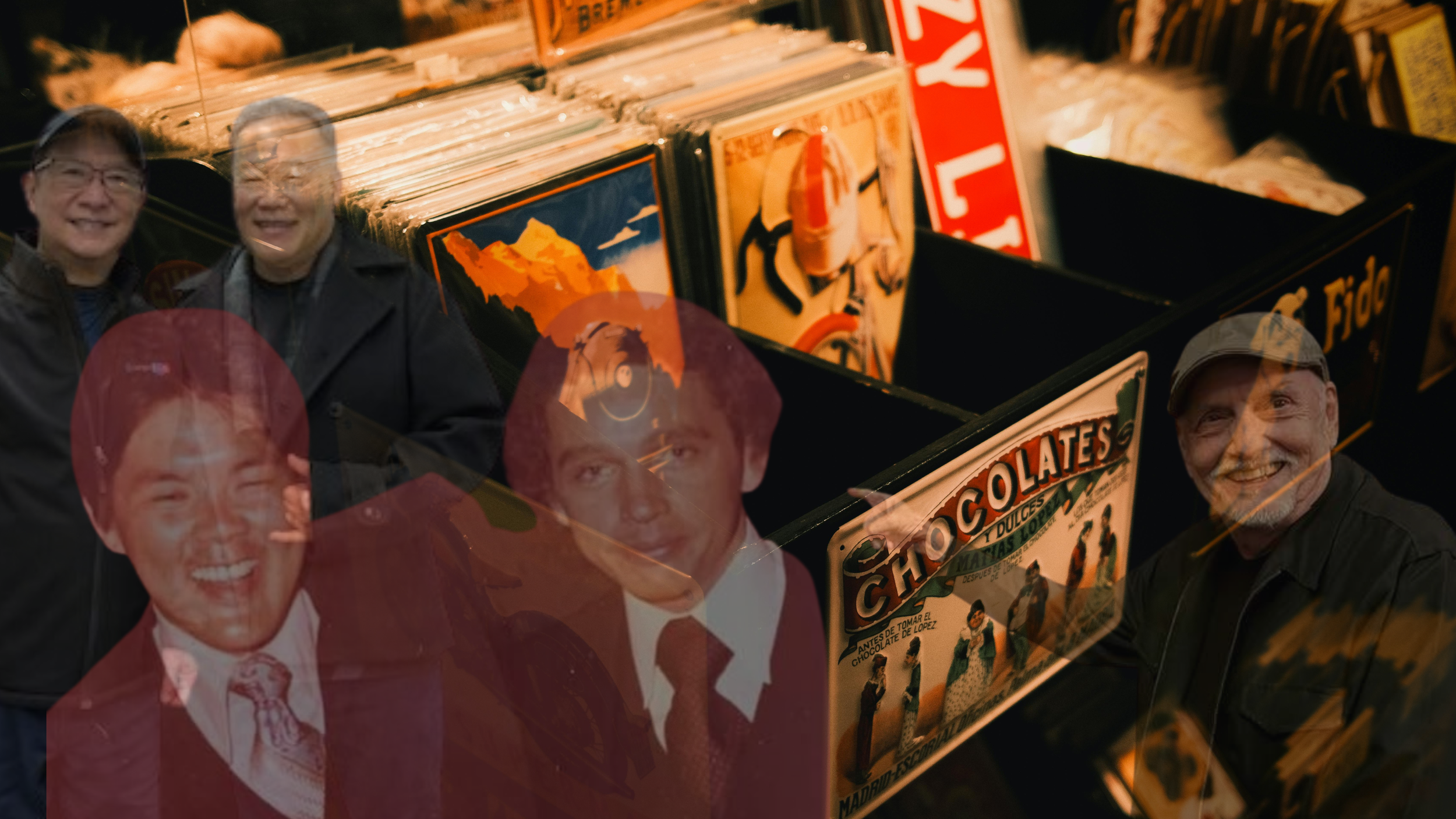
When people listen to my recordings, they hear my voice. What they may not realize is that behind every song, every album, and every recording session stood talented producers who helped transform ideas into finished records.
Over the course of my recording career, I had the privilege of working with four very different producers. Each brought unique skills, perspectives, and musical influences that helped define a specific chapter of my artistic journey. Looking back, I realize that these collaborations not only shaped my recordings but also contributed to my growth as a singer and performer.
1. Brian Robertshaw – The Foundation That Shaped Everything That Followed
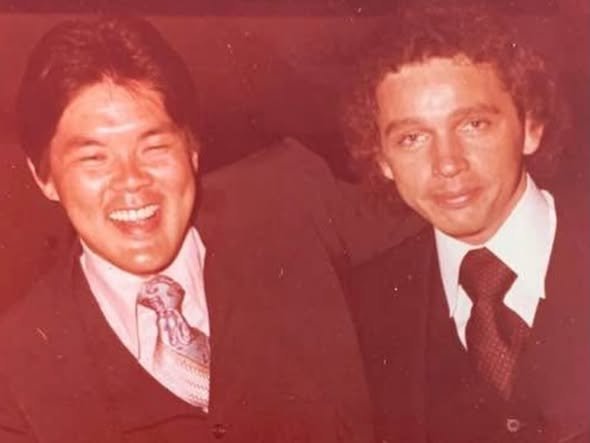
Photo of Jimmy Funai and Brian Robertshaw
Every recording artist remembers the person who first opened the studio door and taught them how to become a recording artist, not simply how to sing into a microphone. For me, that person was Brian Robertshaw.
At the time, Brian was arguably Hawaii’s premier producer for local contemporary artists and one of the most respected names in recording. When he agreed to produce my debut single, Fairy Tale, and later my first LP, Kevin I. (1980), I had the opportunity to learn from someone whose expectations and standards shaped generations of local talent.
Looking back now, I realize Brian’s greatest contribution wasn’t simply producing records — it was teaching me the etiquette, discipline, and professionalism required to survive and succeed in recording music.
Those lessons stayed with me throughout my entire recording career and remain with me even today as I continue creating new recordings more than four decades later.
One of Brian’s earliest teachings was simple but unforgettable:
Recording studio time is expensive — show up prepared.
He taught me that every hour in the studio costs money and represents the time and effort of engineers, musicians, arrangers, and producers. Artists should never walk into a session hoping to figure things out on the spot. Rehearse. Know the material. Be vocally ready. Respect everyone’s time.
That philosophy became foundational to the way I approached every recording project afterward.
Another lesson Brian impressed upon me was even more profound:
Recordings are forever.
He reminded me that recorded music outlives the artist. Long after we’re gone, future generations may discover our songs and form impressions about who we were and what we created.
His message was clear — do the best work possible because your recordings become your legacy.
That philosophy also shaped an important production decision that I appreciate even more today than I did then.
Brian strongly discouraged cutting corners on the recordings to save money.
At the time, it would have been cheaper to use synthesizers to imitate strings and horns. Instead, Brian pushed for using live players whenever possible. It increased the budget, but he believed audiences could hear and feel the difference.
Forty years later, I understood exactly what he meant.
People occasionally tell me that my recordings have held up remarkably well over time. When I hear that, I quietly thank Brian Robertshaw. His insistence on preserving musical authenticity rather than saving a few hundred — or even a few thousand — dollars made those recordings timeless.
And perhaps his most personal advice was also his most prophetic.
Brian complimented my vocal ability and encouraged me to continue growing as a singer, but he also offered guidance that would shape my artistic identity forever.
He told me:
“Don’t fight the gift that God gave you. Your voice was tailor made for love songs. Stay in that lane and your music will never go out of style because people will always connect with love songs and songs about heartbreak.”
At the time, I simply accepted the advice.
Today, looking at listener data and seeing that many of my strongest streaming audiences are younger listeners between ages 18 and 34 who were not even born when those recordings were released, I realize how right he was.
Love songs remain universal. And Brian Robertshaw helped me discover that they were my home.
2. Jimmy Funai – Expanding the Musical Palette
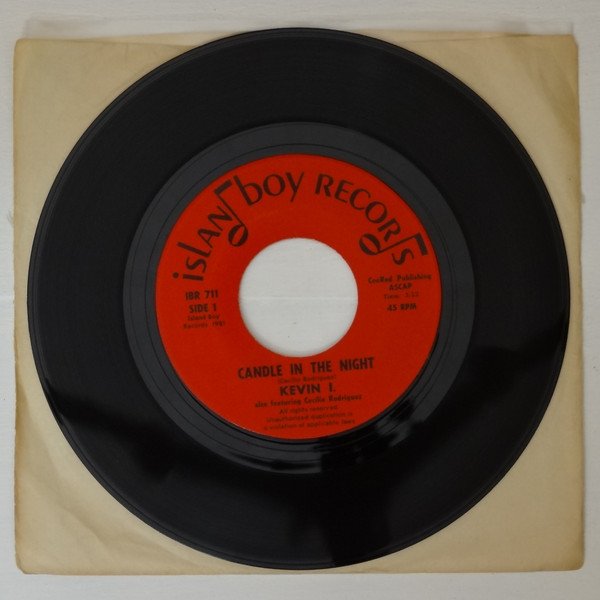
Candle in the Night record
My next significant producer relationship was with Jimmy Funai, one of Hawaii’s most respected musicians, arrangers, and producers.
Jimmy brought a broader musical sophistication to the recording process. Known for his work as a guitarist, composer, arranger, and producer, he was highly regarded throughout Hawaii’s music community for his versatility and musicianship.
One of the highlights of our collaboration was the recording of “Candle In The Night,” a beautiful song composed by Cecilio Rodriguez of the legendary duo Cecilio & Kapono. The recording session became even more memorable when Cecilio himself joined me in the studio to sing background vocals on the track. For a young artist, sharing a microphone with one of Hawaii’s most respected singer-songwriters was both exciting and inspiring.
Jimmy’s confidence in me extended beyond my own recording projects. He later hired me to sing background vocals on local artist Hal Bradbury’s solo album following Hal’s departure from the popular Hawaii group The Krush. Being invited into those sessions gave me additional studio experience and allowed me to learn from other talented musicians and performers.
Jimmy’s influence extended well beyond his work with me. Throughout his career, he contributed to numerous Hawaii recording projects and earned a reputation as one of the Islands’ most accomplished studio musicians and producers. His ability to blend contemporary styles with strong musicianship left a lasting impression on many artists, including myself.
Our work together represented an important transition period as I continued developing my sound and artistic identity.
3. Bob Wilson (Seawind) – Learning the West Coast Recording Mindset
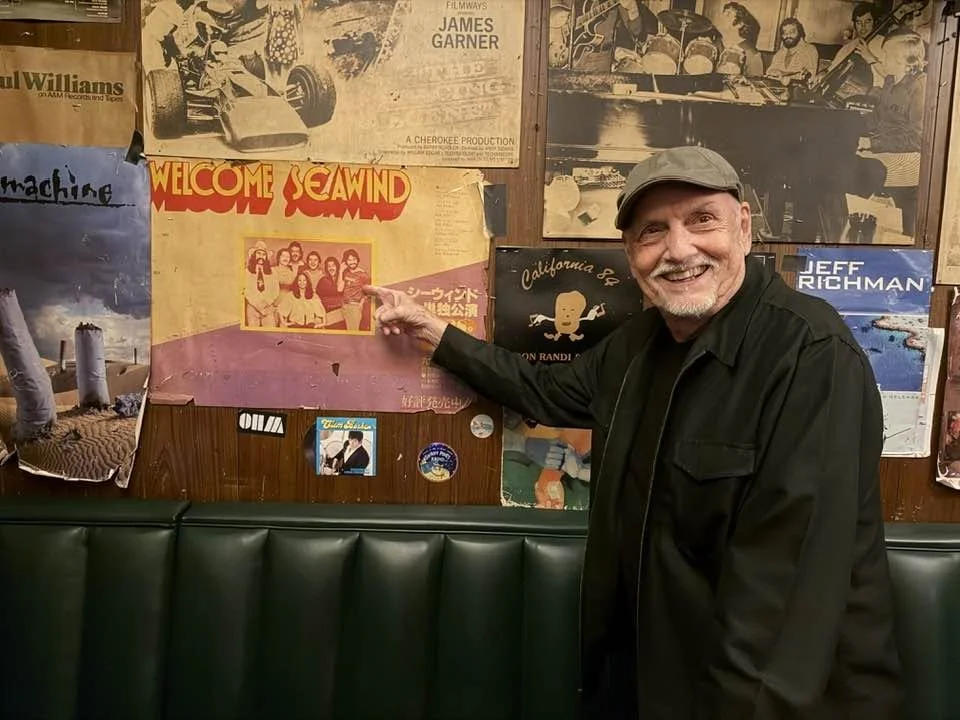
Photo of Bob Wilson
One of the most exciting chapters of my recording career began when I had the opportunity to work with Bob Wilson, founder, drummer, songwriter, and creative force behind Seawind.
By the time we worked together, Bob and Seawind had already established a reputation for sophisticated musicianship and polished production rooted in the Los Angeles studio tradition. Working with him exposed me to an entirely different recording philosophy and opened my eyes to what professional West Coast production standards looked like.
Bob produced my 1984 album New Dimensions, a project that remains one of the proudest achievements of my recording career.
But beyond the final album itself, Bob gave me something even more valuable, he taught me the Los Angeles approach to making records.
One lesson in particular transformed how I thought about vocals.
During production, Bob made a surprising decision.
He insisted that we not hire outside backup singers.
Instead, he believed the strongest sound would come from building the harmonies using my own voice through layered arrangements and extensive double and triple tracking.
At first, the process felt challenging and demanding.
Track after track, harmony after harmony, Bob pushed me to sing the parts myself and taught me how to think like a producer — how harmonies fit together, how stacked vocals create warmth and depth, and how vocal texture becomes part of the emotional identity of a song.
The one exception was my duet recording with Charlene.
Otherwise, Bob encouraged me to create the entire vocal architecture.
That experience became transformational.
Because of Bob’s coaching and insistence on vocal layering, I became proficient in tracking my own harmonies and background vocal skills that I carried into future recordings and still draw upon today.
The album itself reflected a more polished West Coast sound and ultimately earned a Nā Hōkū Hanohano Award for Best Engineered LP.
But for me personally, one of the greatest gifts Bob Wilson gave me was confidence — not only as a singer, but as a vocal arranger and recording artist.
He showed me that my voice could be more than a lead instrument.
It could become the orchestra.
4. Lance Jyo – Bringing the Story Full Circle
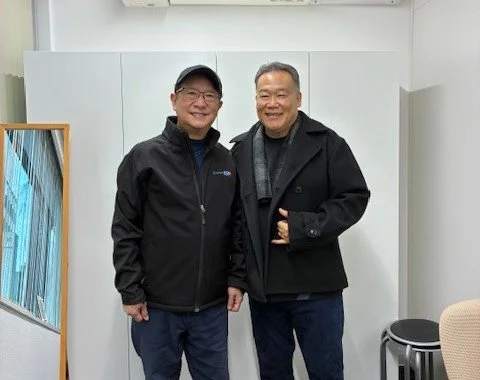
Photo of Kevin I. and Lance Jyo
After more than four decades away from recording new music, God and fate brought me together with producer, songwriter, and recording artist Lance Jyo.
Among fans of AOR, West Coast pop, and yacht rock, Lance has built a loyal following through an impressive catalog of recordings, including more than ten album projects released through Cool Sound Records Japan. His songwriting, musicianship, and deep appreciation for the classic West Coast sound have earned him respect among music fans in Japan, Europe and the United States.
Lance’s connection to my career began long before he became my collaborator - producer. He was the person who first introduced my 80’s AOR music to Toshi Nakada, President of Cool Sound Records Japan, and suggested that the label release a CD reissue of my original Kevin I. recording for the Japanese market. That recommendation helped introduce my music to an entirely new audience of Japanese AOR fans decades after the original releases.
What makes Lance’s role in my career especially meaningful is that he helped write the final chapter of my current recording story.
Lance was instrumental in championing the release of my 2025 EP My Continuum, followed by the holiday single Christmas In Our Hearts, the 2026 studio production of One In Love and most recently released Keep Believin’ from a new release project for 2026. More importantly, he continually encouraged me to return to the recording studio after more than forty years away from creating new music.
As a producer, Lance took a leap of faith. While he had built a successful reputation as a recording artist and songwriter, producing another artist was a new challenge. Yet he embraced the opportunity wholeheartedly, bringing creativity, patience, and vision to every project we worked on together.
His production style honored the spirit of my original recordings while giving the new material a contemporary sound that resonated with today’s listeners. Throughout the process, Lance proved himself not only as a talented songwriter and producer, but also as a trusted friend and creative partner.
Most importantly, he convinced me that it was not too late to record again.
Without Lance’s belief, encouragement, and persistence, My Continuum, Christmas In Our Hearts, and One In Love may never have been recorded. For that, I will always be grateful.
Final Reflections – More Than Producers, They Became Part of My Story
As I reflect on my recording journey — from my earliest sessions in Hawaii to returning to the studio more than forty years later, I realize these four producers gave me far more than completed albums and recorded songs.
Brian Robertshaw taught me discipline, professionalism, and that recordings are a permanent reflection of an artist’s standards and values.
Jimmy Funai showed me the importance of musicianship, collaboration, and trusting in the creative process while opening doors that expanded my experiences beyond my own projects.
Bob Wilson introduced me to the artistry and precision of the West Coast recording world and helped me discover abilities in vocal arranging and production that I never knew I had.
And Lance Jyo reminded me that creativity doesn’t have an expiration date — and that sometimes all it takes is one person who believes in you to begin again.
When people hear my recordings today — whether Fairy Tale, Candle In The Night, Paradise, My Forever Love, Christmas In Our Hearts, or One In Love, they may hear my voice, but they are also hearing the fingerprints of these remarkable producers.
Each entered my life at exactly the right time.
Each challenged me in different ways.
Each left lessons that I continue to carry into every recording session even today.
One lesson remains above all others: Music is never created alone.
Behind every artist is someone willing to teach, push, encourage, challenge, and believe. I was fortunate to have four.
To Brian, Jimmy, Bob, and Lance — thank you for helping shape not only my music, but the artist and person I became.
Your influence will live on in every note.